Why Bad Sessions Hit Different at Beautiful Casinos: The Memory Science Nobody Talks About

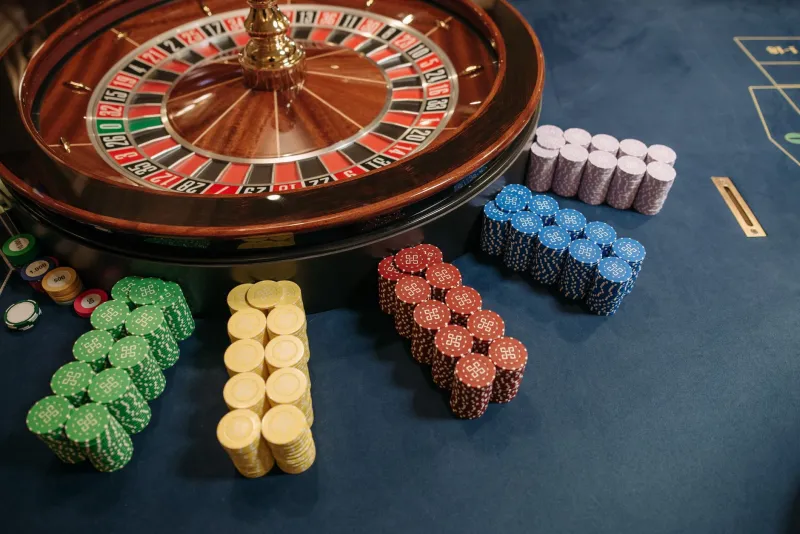
You've had a decent run at a basic-looking site before — lost a little, shrugged, moved on. But then you take a bad beat at a visually spectacular platform, one with sleek animations and rich color palettes and that satisfying click every time a card flips, and somehow that loss lives in your head for days. You replay the hand. You second-guess the bet. You can practically still see the roulette wheel spinning against that gorgeous deep-green felt.
That's not a coincidence. That's your brain doing exactly what it was built to do — and beautiful casino design is quietly making it worse.
Your Brain Has a Filing System, and It's Not Fair
Here's the thing about human memory: it doesn't record experiences like a security camera. It edits. It prioritizes. And one of the biggest factors that determines what gets saved in vivid detail versus what fades into background noise is emotional intensity.
Neuroscientists call this the emotional enhancement of memory. Experiences that trigger strong feelings — particularly negative ones — get tagged by the amygdala and stored with extra detail. That's why you probably remember exactly where you were when something awful happened, but struggle to recall what you had for lunch three Tuesdays ago.
Now add a visually stunning environment into that equation. When your senses are fully engaged — rich colors, fluid animations, immersive sound design — your brain is already running hot. Every detail is getting logged. And when a loss lands inside that heightened sensory state? The emotional encoding goes into overdrive.
A bad beat at a bland interface is forgettable. A bad beat surrounded by beautiful design is practically cinematic.
The Regret Amplifier You Never Asked For
Loss aversion is one of the most well-documented quirks of human psychology. Research consistently shows that losses feel roughly twice as painful as equivalent gains feel good. Lose $100, and the sting is about twice as sharp as the pleasure you'd get from winning $100. It's not logical, but it's deeply human.
Beautiful casino environments crank that dial up further. Here's why: when a space feels premium, your brain assigns it higher stakes — not just financially, but emotionally. There's an implicit sense that this matters more. The aesthetic quality signals importance, and your mind responds accordingly.
So when you're playing at a platform that looks genuinely stunning — the kind of interface where even the loading screens feel intentional — a losing session doesn't just sting. It feels like a meaningful event. Something worth analyzing. Something worth replaying.
And replaying. And replaying.
Why Pretty Platforms Fuel the Post-Session Spiral
There's a specific cognitive loop that players fall into after rough sessions at visually rich platforms, and it goes something like this:
The loss happens. Because the environment was immersive, the memory is sharp and detailed. Because the memory is sharp, your brain keeps returning to it — a process psychologists call rumination. And because the platform looked so good, there's an added layer of what researchers call counterfactual thinking: the mental habit of imagining how things could have gone differently.
"If I'd just hit instead of standing on that 14..." "If I'd stayed with my original bet instead of doubling..." The prettier the experience, the more your brain insists on writing alternate endings for it.
This is genuinely different from how we process losses in less aesthetically charged environments. Think about losing at a quick card game on a basic mobile app versus losing at a beautifully designed live dealer table with a real human on the other side of a high-definition stream. The emotional weight is categorically different, even if the dollar amount is identical.
The Winning Side of This Equation (And Why It Doesn't Balance Out)
Here's where it gets a little frustrating: the same mechanism that makes losses more memorable doesn't apply equally to wins.
Wins at beautiful casinos are certainly enjoyable — the animations, the sounds, the visual payoff of a big slot hit on a stunning platform are genuinely satisfying. But wins tend to be processed as expected outcomes by players who feel they've played well. Expected outcomes, even pleasant ones, don't get the same deep-storage treatment from your memory.
Losses, on the other hand, feel like violations of expectation. Your brain flags them as things that need to be understood, learned from, and — this is the trap — prevented in the future. So it keeps pulling them back up for review.
The net result? Your mental highlight reel from a gorgeous casino platform is going to be disproportionately stocked with bad sessions, even if your actual win/loss record is perfectly average. You end up with a skewed internal narrative about your own performance that doesn't match reality.
What You Can Actually Do About It
Knowing this doesn't make you immune to it, but it does give you some useful tools.
Keep a simple session log. Not a detailed journal — just a quick note of your starting stack, ending stack, and one-line summary after each session. When your brain starts replaying a painful loss, having actual data to reference gives you something concrete to push back with. Memory is unreliable. Numbers aren't.
Create a deliberate cool-down routine. After any session — win or lose — give yourself a few minutes of intentional distance before you start mentally reviewing it. Put the phone down. Step away from the screen. The goal is to let the emotional intensity drop before your brain starts filing the memory. Less emotional charge at the moment of encoding means less vivid storage.
Reframe what 'memorable' means. If a session at a beautiful platform sticks with you, that's not necessarily a signal that you played badly or that something went wrong. It might just mean the environment did its job well. Separating the emotional intensity of a memory from its actual informational value is a skill worth building.
Audit your mental highlight reel occasionally. Every few weeks, try to deliberately recall your last ten sessions without checking records. Notice which ones come up easily. Then check your actual log. The gap between what you remember vividly and what actually happened is your brain's bias made visible.
The Takeaway
Pretty casino design is genuinely great. The investment platforms make in visual quality, immersive interfaces, and polished experiences makes playing more enjoyable — full stop. But part of being a smart player is understanding what that beauty is doing to your brain beyond the obvious.
The same stunning environment that makes a winning session feel electric is also making your losing sessions stickier, more emotionally resonant, and harder to let go of. That asymmetry is worth knowing about. Not so you play at uglier platforms — but so you stop letting your most visually vivid memories write the story of what kind of player you actually are.